
Today’s education aims to prepare students for a world where digital fluency is just as important as reading and writing, rather than just covering a curriculum. Students who aren’t used to technology at an early age will find themselves catching up rather than keeping up with the fast pace of development. As a leading school in Nagpur, Centre Point Schools build this into how students learn rather than treating it as a separate subject. Students understand not just how technology works but how it applies to daily life and where it can take them professionally. The focus isn’t just on academic performance — it’s on producing learners who are genuinely confident when it comes to using digital tools in situations that actually matter.
Creating a Technology-Rich Learning Environment
At Centre Point Schools, digital learning is part of how everyday teaching happens — not a separate activity reserved for computer class. Smart boards, interactive lessons and technology-assisted revision make concepts easier to grasp and lessons more engaging. Teachers use these tools for more than just presenting information — practice, feedback and reinforcement all happen digitally too. Students gradually begin to see technology as a natural part of learning rather than something separate from their studies.
Introducing Students to Basic Coding Skills
Coding for students at Centre Point Schools starts simple — logic-building activities and visual programming tools that show how instructions work before any complex language is introduced. What this does early on is shift how students see technology. Instead of something they only consume, it becomes something they can actually build. Curiosity about how apps, games and websites work tends to follow naturally, and the confidence that comes from creating something — even something basic — stays with students well into higher classes.
Learning How to Use Computers for Everyday School Work
Using computers for real school tasks — assignments, presentations, research — builds comfort with technology far more effectively than any standalone lesson. Working with digital tools as part of everyday studies builds confidence and reduces the challenges often faced when moving to higher levels of education. As a top school in Nagpur, Centre Point Schools help students build essential computer skills such as typing, document formatting and effective online research by integrating them into everyday classroom activities rather than teaching them as separate lessons but as part of how everyday school work gets done.
Teaching Students How to Stay Safe Online
Knowing how to use the internet and knowing how to use it safely are two different things. Digital awareness covers both — students learn about privacy, safe browsing and protecting personal information as part of how they’re taught to engage online. Understanding ethical behaviour in digital spaces builds discipline that carries into how students use social media and online platforms outside school too. These aren’t abstract lessons — they’re habits that matter every time a student goes online.
Using Smart Boards and Digital Tools in Lessons
When presented visually, an idea that is challenging to understand on paper often gives an immediate understanding. Smart boards, digital presentations, videos and animations bring this into everyday classroom learning — making complex topics more accessible and keeping attention in a way that a lecture alone rarely manages. When students can see what’s being explained rather than just hear it, questions come more naturally and participation follows without much prompting.
Helping Students Work on Projects Using Technology
Digital tools have changed how academic projects get done — and students who work with them regularly build more than just technical ability. Presentations, videos and research platforms develop creativity and responsibility alongside the actual subject knowledge. Group projects add another layer, teaching students how to divide tasks, share ideas and meet deadlines together. Coding education fits naturally into this process too — when students understand how technology works from the inside, they bring a different kind of thinking to how they use it for their work.
Building Confidence in Using Online Platforms
Centre Point Schools ensure that students are comfortable using different online platforms for learning. This includes educational apps, learning portals and digital classrooms. This exposure is part of digital learning, where students gradually become confident in navigating online systems. It also prepares them for future academic environments where online tools are commonly used.
Building Smart Online Research Skills
Students are taught how to search for reliable information on the internet. They learn how to filter useful content from unnecessary or incorrect information. This helps them develop strong research habits. These skills are closely linked to computational thinking, as students begin to analyse information logically instead of accepting it at face value. It improves their decision-making and understanding of topics.
Helping Students Understand How Technology Is Used in Real Jobs
By examining real-world examples, students learn how technology contributes to different professions such as business, healthcare, engineering and media. This helps them understand the importance of digital skills in different careers. They also explore how coding education supports industries by powering software, applications and automation systems. This awareness helps them make better career choices in the future.
Supporting Academic Growth Through Digital Exposure
As students’ progress, they experience how STEM education benefits real-world learning. Subjects like science and mathematics become more practical when supported by digital tools and experiments. This approach improves understanding and helps students connect theory with practical applications. It also builds interest in technical subjects and innovation.
Developing Future-Ready Skills Through School Initiatives
Academic strength and digital confidence together prepare students for what comes after school — and that balance is what Centre Point Schools focus on building. During the CBSE School admission process, modern learning methods and strong academic support are among the first things families look for. As a top school in Nagpur, the focus isn’t just on results — it’s on producing students who are genuinely ready for the environments and opportunities that follow.
Strengthening Logical Thinking and Problem Solving
Students are guided to think logically while solving academic and real-life problems. This is where computational thinking becomes an important part of learning. It helps students break problems into smaller steps and find effective solutions. Such thinking improves academic performance and also prepares students for future challenges in different fields.
Encouraging Practical Application of Knowledge
The school ensures that students apply what they learn in real situations. This includes experiments, projects and digital activities that make learning meaningful. Through this approach, coding for students becomes more than just a subject—it becomes a practical skill that they can apply in real life situations and future careers.
Preparing Students for a Competitive Academic Future
With strong academic structure and modern learning tools, students are well-prepared for competitive exams and higher education. Schools offering STEM education benefits help students develop analytical skills, scientific thinking and problem-solving ability. This makes them confident in facing future academic challenges and career opportunities.
Developing a Complete Digital Learning Ecosystem
Technology isn’t an add-on at Centre Point Schools — it runs through classroom teaching, assignments and projects as a natural part of how learning happens. This integration ensures students grow in an environment that reflects the world they’re actually heading into. As one of the trusted CBSE schools in Amravati Road, the focus on computer learning in schools goes beyond access to devices — it’s about building genuine competence through practical exposure and teaching methods that keep pace with how the world is changing. Visit to know more about computer learning in schools
FAQs
1. How do Centre Point Schools support digital learning?
They use smart tools and interactive teaching methods to make learning more engaging and tech-based.
2. Why is coding important for students?
It builds logical thinking and helps students understand how technology works.
3. What is computational thinking in students?
It is a way of solving problems step by step using logic.
4. How does STEM education help students?
It improves problem-solving skills and connects learning with real-life applications.
5. How are students prepared for the future?
They are trained with digital tools, projects, and modern learning methods.
Conclusion
Strong academics and digital readiness aren’t competing priorities at Centre Point Schools — they’re built together. As a leading school in Nagpur, the focus is on giving students both the traditional foundation and the modern skills they’ll actually need going forward. Structured exposure to tools, projects and logical thinking means students arrive at higher education and future careers already comfortable with what’s expected of them. That combination of academic depth and practical digital experience is what makes the difference in the long run.
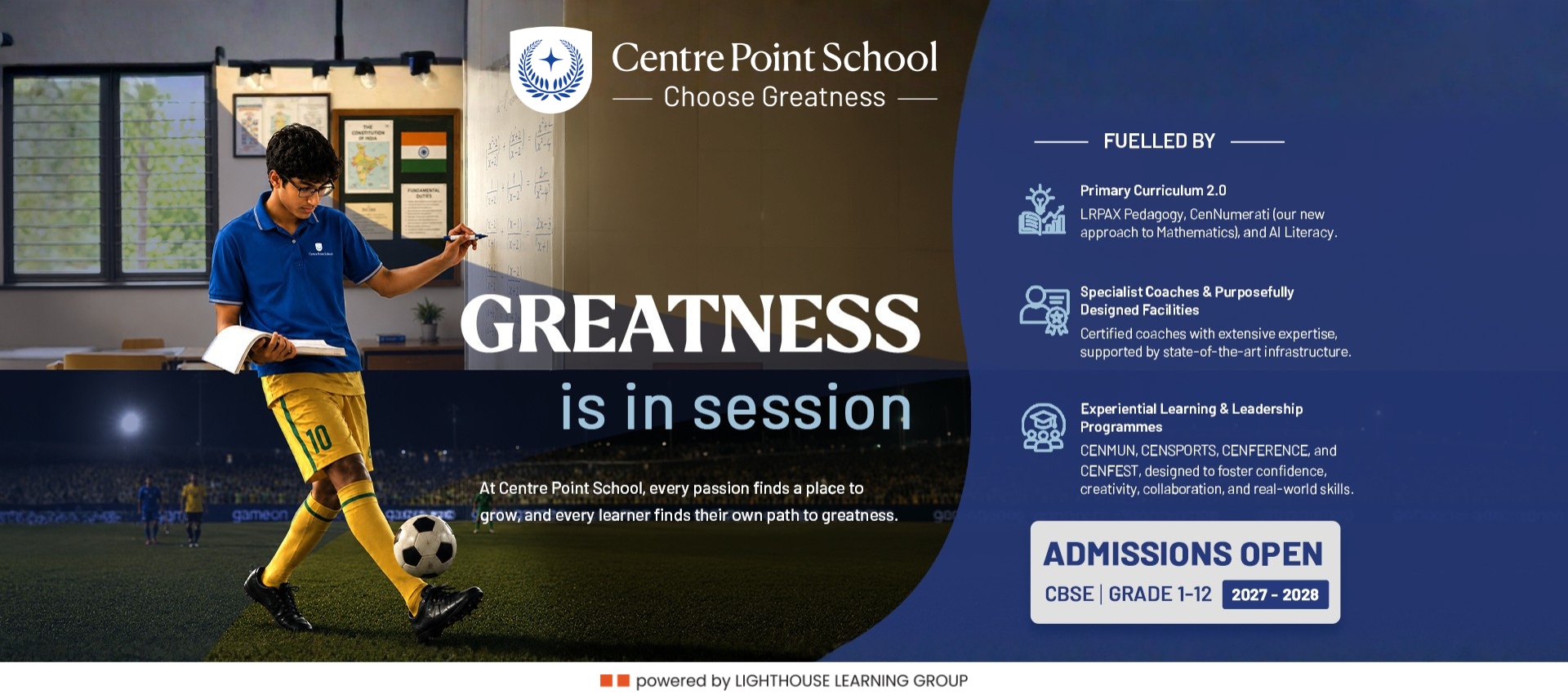
At Centre Point School, students are prepared for a digital future through modern teaching methods, smart classrooms, and practical learning experiences that build confidence in technology and problem-solving. As one of the trusted CBSE Schools in Amravati Road, it focuses on holistic development during CBSE School Admission, helping students gain future-ready skills. If you want to know more, Enquire Now for admission details.